
Buying land can be an exciting first step toward building a home that fits your lifestyle, goals, and future plans. Whether you already own property or are beginning your search, understanding the land buying process can help you avoid unexpected costs, evaluate homesites more confidently, and better prepare for construction.
From budgeting and financing to zoning, utilities, and site preparation, here are 10 important steps to consider before buying land and building your future home.
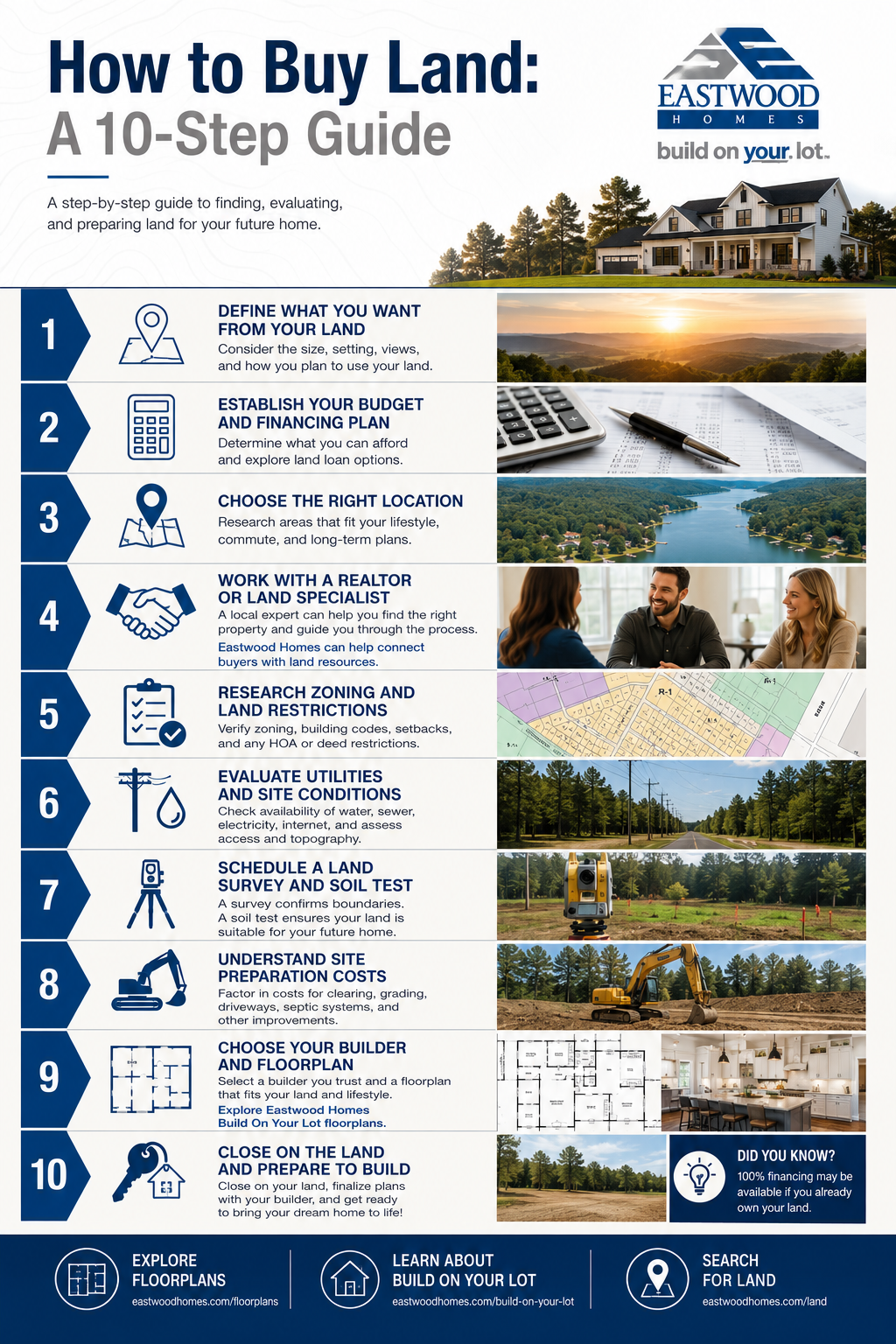
Before searching for property, think about how you plan to use the land and what matters most for your future home. Consider things like location, acreage, privacy, utilities, school districts, commute times, HOA restrictions, and whether the property is already build-ready.
Every homesite is different, and understanding your priorities early can help narrow your search. Some buyers want wooded acreage and privacy, while others prioritize proximity to work, schools, shopping, or family. It is also important to think about long-term goals, including outdoor living space, detached garages, workshops, or accessory dwelling units if permitted.
Buying land often works differently than buying an existing home. Some buyers purchase land with cash, while others explore land loans or construction financing. Understanding your budget early can help narrow your search and avoid surprises later in the process.
The land itself is only one portion of the total investment. Buyers should also budget for site preparation costs like grading, clearing trees, utility installation, septic systems, driveways, drainage improvements, and permits. Depending on the homesite, site preparation costs may range from approximately $35,000 to $150,000, although most fall in the $35,000-$65,000 range. Homesites with existing infrastructure and utility access may require less preparation than undeveloped or sloped land.
Many buyers also ask whether they can purchase land now and build later. In many cases, the answer is yes. This approach can provide flexibility while allowing buyers to secure property in a location they love before beginning construction.
Look beyond just the property itself and evaluate the surrounding area. Think about nearby amenities, road access, future development plans, internet availability, utilities, flood zones, and the overall long-term value of the location.
Location impacts not only your daily lifestyle but also future resale value and construction costs. Buyers should consider commute times, nearby development, road accessibility, and utility availability before purchasing land. Visiting the surrounding area at different times of day can also provide insight into traffic patterns, noise levels, and overall livability.
Working with experienced professionals can make the process smoother. A real estate agent familiar with land purchases, along with builders, lenders, surveyors, and attorneys, can help identify potential issues before you buy.
One of the biggest misconceptions about building on your own lot is that buyers must already own land before contacting a builder. In reality, the Eastwood Homes Land Search tool can help buyers explore available homesites throughout North Carolina and South Carolina while also connecting with professionals who understand the land buying and homebuilding process. Whether you are looking for acreage in a rural setting, land near a growing suburb, or property closer to family, starting with the right team can make the process significantly easier.
Before moving forward, investigate whether the land can support your plans. Buyers should review zoning regulations, property boundaries, soil conditions, utility access, easements, septic requirements, environmental restrictions, road access, and CCR's (Covenants, Conditions, and Restrictions). These are separate from HOA or POA requirements and are more binding legally. They often exist even when there is no HOA or POA association.
Not all land is immediately ready for construction. Factors like zoning designation, environmental restrictions, flood zones, wetlands, and utility access can significantly impact the timeline and overall cost of your project.
Before buying land, buyers should also consider:
If zoning does not allow your intended use, buyers may need to explore rezoning, variances, or conditional use permits before construction can begin.
The purchase price is only one part of the equation. Depending on the homesite, you may also need to budget for clearing trees, grading, utility installation, driveway construction, permits, septic systems, or well installation.
Land preparation requirements vary widely depending on the condition of the homesite. Sloped lots, wooded acreage, difficult utility access, and drainage challenges can all increase construction costs. Understanding these expenses upfront can help buyers avoid unexpected surprises later in the process.
Design options can also factor into the price/budget paradigm if certain desires are important (fireplace, tile bathroom, High end cabinet design and finishes, etc.)
Common site preparation costs may include:
Homesites with existing infrastructure and easier access may require less preparation than undeveloped land.
Photos and maps only tell part of the story. Visiting the property in person can help you understand the terrain, drainage, views, neighboring properties, traffic patterns, and overall feel of the homesite.
Seeing the property firsthand can help buyers identify things that may not appear in online listings, including steep grading, standing water, nearby development, or accessibility concerns. It also provides a better understanding of how the future home could sit on the land and how the property fits your overall vision.
Once you find the right property, your offer should allow time for inspections, surveys, financing approval, and additional research. This due diligence period gives buyers the opportunity to confirm the property fits their goals before closing.
This phase is one of the most important parts of the process because it allows buyers to verify property boundaries, confirm utility access, review restrictions, and better understand site preparation requirements before finalizing the purchase.
Many buyers also schedule a site evaluation during this stage. A site evaluation helps determine how your future home will fit on the property and identifies potential construction considerations early in the process. During the evaluation, teams may review home placement, driveway access, grading, drainage, utility connections, septic placement, and tree clearing requirements.
After closing on the land, the next phase is preparing for your future home. This may include finalizing floorplans, securing permits, coordinating site prep, and working with your builder to create a timeline for construction.
With the Eastwood Homes Build On Your Lot program, buyers can choose from more than 40 floorplans with a variety of structural and design options. Depending on the plan, buyers may be able to personalize features like guest suites, home offices, outdoor living spaces, expanded kitchens, lofts, or three-car garages.
With the right homesite secured, you can begin the exciting process of building a home designed around your lifestyle, needs, and long-term goals.
One of the biggest advantages of building on your own lot is the flexibility to maximize the natural features of the land, including privacy, spacing between homes, sunlight, and views. Unlike traditional neighborhoods where homesites are predetermined, building on your own land gives buyers more control over where and how they want to live.
New construction homes may also provide long-term benefits through newer systems, improved energy efficiency, and reduced maintenance compared to older resale homes. With the right planning and team in place, the Eastwood Homes Build On Your Lot process can help buyers create a more personalized homebuilding experience.
Buying land is one of the biggest steps in the homebuilding journey, and taking the time to properly research homesites, financing, utilities, and site preparation can help you make more confident decisions throughout the process. Whether you already own property or are just beginning to explore your options, understanding what to look for before purchasing land can help set your future home project up for success.
For buyers interested in building on their own lot, the Eastwood Homes Land Search tool and Eastwood Homes Build On Your Lot program can help simplify the process by connecting buyers with available homesites, floorplans, and experienced professionals throughout North Carolina and South Carolina.
From the Blog
Explore the latest and greatest news from Eastwood Homes.